CUSTOM AI DEVELOPMENT · AEROSPACE
AI SOLUTIONS FOR AEROSPACE
Faster design cycles and more reliable inspection, from a team with published aerospace research.
We build bespoke AI for aerospace engineering teams: surrogate models and genetic algorithms that explore far more design variants than simulation alone for composite structures, wings and high-speed missiles, and image processing that automates non-destructive testing. The aim is better performance, lower cost and faster development, without trading off safety.

Peer-reviewed: Journal of Propulsion and Power · AIAA
Granted patents: GB2536006B · US9657714B2
Proprietary neural networks and genetic algorithms
THE PROBLEM
WHERE AEROSPACE PROGRAMMES LOSE TIME AND MONEY
Aerospace design is a search through a huge space of options under strict load, weight and safety constraints. These are the bottlenecks we are asked to solve.
SIMULATION BOTTLENECKS
High-fidelity simulations are slow and expensive, so only a handful of design variants ever get evaluated.
TOO MANY TRADE-OFFS
Strength, weight, drag and cost pull in different directions. Tuning dozens of parameters by hand leaves performance on the table.
MANUAL INSPECTION
Reviewing non-destructive testing images by eye is slow and hard to keep consistent across inspectors and shifts.
GENERIC AI TOOLS
Off-the-shelf AI platforms are built for every use case, which makes them rigid, heavy and slow for specialist engineering problems.
WHAT WE BUILD
AI BUILT FOR AEROSPACE ENGINEERING
Each solution is designed around your data, your simulation tools and your design constraints.
COMPOSITE STRUCTURE OPTIMISATION
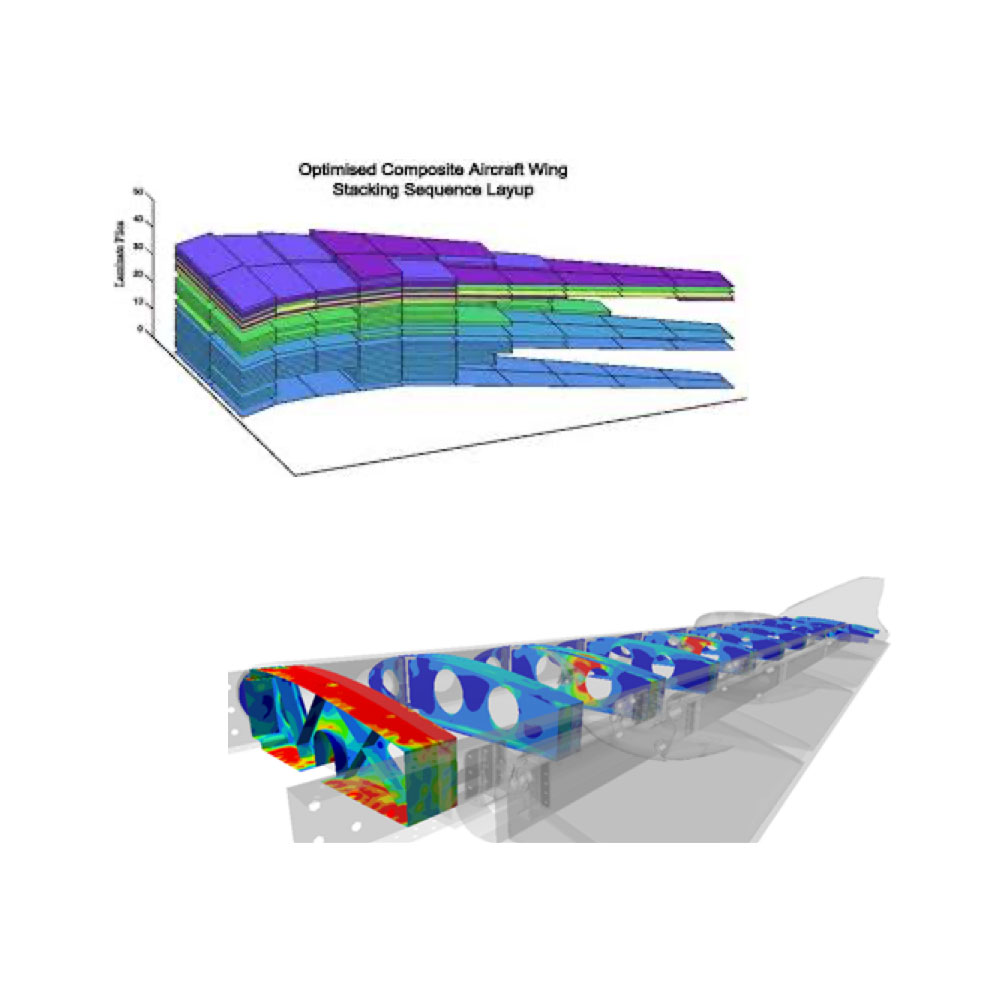
Optimise composite structures for strength, durability and weight. We analyse material properties, simulate performance under different conditions and deliver designs that meet your load and environmental requirements, for better performance and more cost-effective manufacturing.

2D AND 3D WING DESIGN OPTIMISATION
Machine learning combined with computational simulation to improve aerodynamic performance, reduce drag and increase structural efficiency, giving precise, data-backed wing configurations and faster design cycles.
HIGH-SPEED MISSILE DESIGN OPTIMISATION
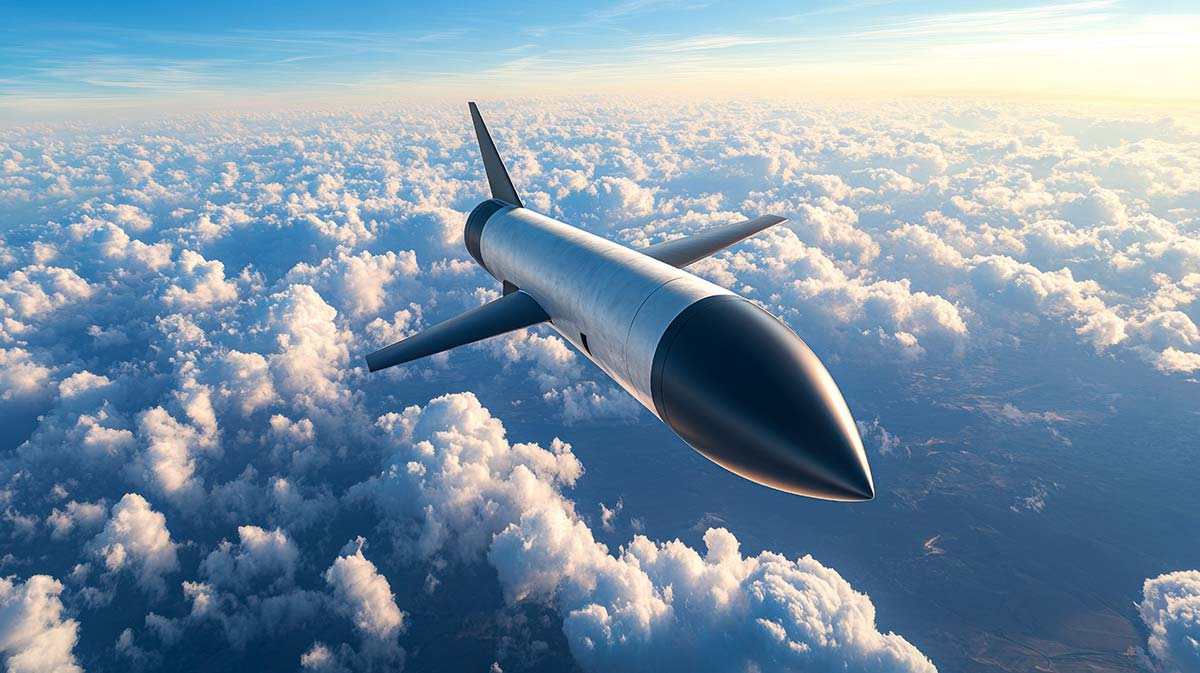
Automated optimisation of aerodynamic efficiency, structural integrity and propulsion, including multi-parameter optimisation over the full flight objective, for faster development of mission-critical systems.

NDT AUTOMATED IMAGE PROCESSING
AI that analyses inspection images and flags defects such as cracks, voids and material inconsistencies in real time, for faster, more consistent evaluations with less manual effort.
DELIVERED WORK
- Automated design optimisation of high-speed missiles
- Automated multi-parameter optimisation over the full flight objective
- Sviluppo automatizzato di aerofoil per concetti avanzati di aerei
Delivered for an aerospace company. Details and evidence available on request under NDA.
Have a design or inspection problem in mind? Tell us about it.
OUR ENGINE
PROPRIETARY TECHNOLOGY, APPLIED TO FLIGHT
We do not resell a general-purpose platform. Three in-house technologies do the heavy lifting, each matched to an aerospace task.
NEURAL NETWORKS
Small, agile networks for classification, surrogate development, forecasting and pattern recognition.
In aerospace: fast surrogate models that stand in for expensive simulations during optimisation.
IMAGE PROCESSING
Larger convolutional networks for image classification, image segmentation and background removal.
In aerospace: defect detection and segmentation in NDT inspection images.
GENETIC ALGORITHMS
Hybrid evolutionary optimisation using multiple cross-over, mutation and evolution techniques.
In aerospace: global multi-parameter, multi-objective design optimisation.
The same team and engine are behind Prime AI’s production software, including the API ID Dispositivo Persistente and the Clothing Size Finder used by retailers today. You work with engineers who ship production AI, not slideware.
RESEARCH & PATENTS
PUBLISHED, PEER-REVIEWED AND PATENTED
Our team’s aerospace optimisation work goes back to the late 1990s: automated optimal design of high-speed missile inlets, published in the Journal of Propulsion and Power and by the American Institute of Aeronautics and Astronautics (AIAA). The team also holds granted UK and US patents in wind turbine and aerofoil technology.
PUBLICATIONS
Michael Blaize, Doyle Knight, Khaled Rasheed (1998). Automated Optimal Design of Two-Dimensional Supersonic Missile Inlets. Journal of Propulsion and Power.
Michael Blaize, Doyle Knight, Khaled Rasheed (1998). Automated optimal design of two-dimensional high-speed missile inlets. American Institute of Aeronautics and Astronautics (AIAA).
Christophe Bourdeau, Michael Blaize, Doyle Knight (1999). Performance analysis for an automated optimal design of high-speed missile inlets. American Institute of Aeronautics and Astronautics (AIAA).
PATENTS
US9657714B2
Vertical Axis Wind Turbine Rotor and Aerofoil. US patent, granted 2017.
GB2536006B
Eddy current brake assembly, particularly for a vertical axis wind turbine. UK patent, granted 2020.
THE TEAM
Michael, from the Prime AI team, co-authored the automated missile-inlet design optimisation papers listed here, and patented an aerodynamic vertical axis wind turbine innovation in 2015.
HOW WE WORK
FROM FIRST CALL TO PRODUCTION
01
FREE CONSULTATION
Explain your challenge, or just explore how AI could streamline and enhance your current business practices. No commitment.
02
DISCOVERY & SCOPING
We review your data, systems and success criteria, then propose an approach, timeline and budget range.
03
PROOF OF CONCEPT
A focused prototype on your own data, so you can judge accuracy and value before scaling.
04
PRODUCTION & MLOps
Deployment to cloud, on-premise or edge, with monitoring, retraining and ongoing support.
FAQ
AEROSPACE AI FAQ
We focus on design optimisation and inspection: composite structure optimisation, 2D and 3D wing design, high-speed missile design including multi-parameter optimisation over the full flight objective, aerofoil development, and automated image processing for non-destructive testing.
We train surrogate neural networks on your simulation results so each design can be evaluated in a fraction of the time, then use genetic algorithms to search large, multi-objective design spaces. Engineers can explore far more variants than with simulation alone and focus expensive runs on the most promising designs.
Yes. Models are built around your data, whether that is simulation output, test results or inspection images. During scoping we review what data you have, its quality and format, and whether more is needed before committing to an approach.
Convolutional neural networks are trained on your inspection images to classify and segment defects such as cracks, voids and material inconsistencies. They flag areas for review in real time, which reduces manual effort and makes evaluations more consistent.
Yes. We can deploy models on-premise, in the cloud or at the edge, so sensitive design data can stay inside your environment. Where your data and models run is agreed during the discovery and scoping step, before any build starts.
Every project is scoped individually, based on the problem, the data available and the accuracy and integration required. We usually start with a focused proof of concept on your own data, and you get an approach, timeline and budget range before any commitment.
RELATED
CUSTOM AI IN RELATED INDUSTRIES


TELL US ABOUT YOUR DESIGN OR INSPECTION CHALLENGE
Book a free consultation with our engineers. We will tell you honestly whether AI is the right tool and, if it is, what a sensible first step looks like.